For most of us, an auction is a simple thing: There’s one item up for grabs, and winner takes all.
But when it comes selling off government-owned wireless spectrum, there are a few more things at play. That’s why explaining the outline of the upcoming 700 MHz auction, announced last week by Industry Canada, can lead to headaches. We’ll try and give some pain relief.
To begin, remember the 700 MHz band is eagerly sought by carriers because of its ability to efficiently use the newest wireless high speed technology, LTE.
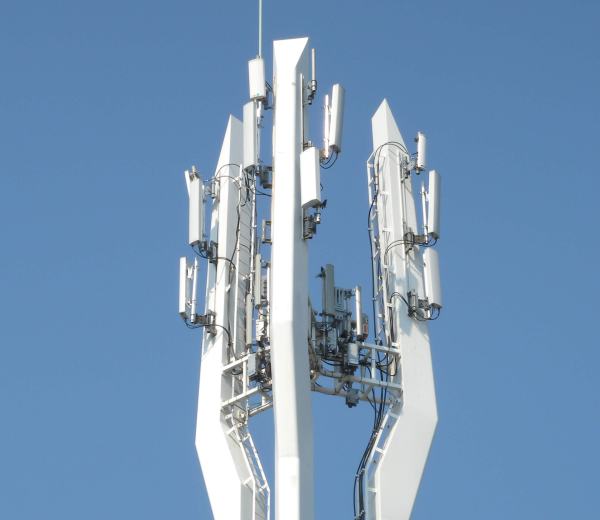
First, the government wants to ensure there is a real auction, because the more fighting, the higher the prices go, and the more money that flows into the treasury.
In the 2008 auction, most observers expected the government would pull in around $2 billion. It got $4 billion – by luck or by design.
Second, Ottawa has to ensure that more than one carrier gets spectrum.
Third, there had to be some mechanism for ensuring that new small carriers – including Wind Mobile, Mobilicity, Public Mobile and Videotron, all of whom got into the cellular business buying spectrum in the 2008 auction – will be assured of not being pushed out of the bidding by Rogers, Bell or Telus Communications Corp. The Big Three have over 90 per cent of the wireless subscribers.
So here’s what will happen at next year’s auction (get your Aspirin ready):
SEVEN BLOCKS UP FOR BID
The country will be sliced into 14 districts (southern and northern Ontario are two, B.C and Alberta are each one. Here’s a link to the list), each with seven blocks of frequencies to be auctioned. These blocks are named alphabetically as A, B, C, C1, C2, D and E.
I assured you a headache, and here it comes: Wireless frequencies can be split into upper and lower bands. For two-way communications, each band can be further split in half: One with, say, 5 MHz for the uplink, the other an equal amount for the downlink. Industry Canada can sell either a pair of frequencies, or a single group. Obviously, paired spectrum is more valuable than unpaired for cellular communications.
In this group, A, B, C, C1 and C2 will be sold as paired blocks. Blocks D and E are unpaired (or one-way) spectrum.
The reason why there will be three “C” blocks is the first one is the lower band of a certain range of frequencies, while other two represent the upper band that has been split in half. You’ll see why in a second.
Looking at all seven bands, Robert Yates, a co-president of the Montreal-based telecommunications consultancy Lemay-Yates Associates, says the “beachfront property” – the really valuable stuff – is in blocks B, C, C1 and C2. Even Industry Canada calls them prime.
That’s for two reasons: One is they will be sold with paired frequencies. Second, they are aligned with the same 700 MHz blocks that U.S. carriers AT&T (in this case B and C) and Verizon Wireless (C1 and C2) have.
Canadian carriers want their subscribers to be able to roam in the U.S., so these four blocks will attract the fiercest bidding.
However, not all blocks are equal. AT&T’s network is compatible with the new LTE/HSPA wireless standard as well as the older GSM standard (so if your phone can’t get the former, it will default to GSM), as is Rogers’ network. Rogers’ phones work very well on the AT&T network. So it is expected that Rogers’ target will be the B and C bands.
Verizon’s new network uses LTE, but it defaults to the older CDMA standard that Bell and Telus also share on their older networks. Bell and Telus, industry analysts say, will likely prefer to buy B and C blocks and not have to worry about buying smart phones from manufacturers that can default to CDMA. Most of their current handsets roam on Verizon’s network, Yates notes. But, he adds, the Apple iPhones that Bell and Telus sell roam on the AT&T frequencies, not Verizon’s — another reason they may prefer to fight for the B and C blocks.
So, in the words of telecommunications consultant Mark Goldberg, the four prime blocks are nice, but the B and C blocks are “nicer.”
They’re also nicer, he points out, because each piece of paired frequencies total 12 MHz (6MHz up and 6 down) of spectrum, while the C1 and C2 blocks each total 10 MHZ (5+5). The more spectrum, the more traffic that can be handled.
All this explains how the government ensures there’s lots of spectrum to go around.
Here’s how it protects new players:
Of the four prime blocks, Industry Canada says incumbent carriers (in most of the country that means Bell, Rogers and Telus) can only win ONE in each district. This is called a spectrum cap. Assuming the Big Three are each the highest bidder for one block per district, that would leave one paired block open for small carriers or new bidders.
If an incumbent carrier wants to buy two paired blocks, Industry Canada mandates one of them has to be the A block. (So no incumbent carrier can buy B and C, or B and C2. It has to be A plus one of the others). And the A block is no bargain. Although it has paired frequencies, at the moment there are technical problems preventing carriers in the U.S. from using it (such as interference with TV channel 51), so there’s little wireless network and handset equipment for it to run on. Industry Canada believes that will be resolved in part when the interference problem is resolved at some time in the future.
What about the unpaired D and E blocks? These are lower band blocks open for any bidder, but they are only one-way blocks 5 MHz wide. At the moment there are no handsets that can use that spectrum. Whether that will change in a year, when the auction is held, is a question – and therefore a gamble for bidders.
But in 2010 AT&T thought this range of frequencies were valuable enough to pay the company that had bought it in an earlier auction, chipmaker Qualcom Inc., almost US$2 billion for D and E spectrum covering 300 million people (although some of it was 12 MHz blocks).
Amit Kaminer, an analyst with the SeaBoard Group telecommunications consultancy, says these two blocks might be used for one-way mobile TV service.
Industry Canada has put on other obligations on bidders. In each district where a carrier with an HSPA wireless network (essentially everyone but Public Mobile) buys two blocks of paired spectrum — or, through a sharing agreement with a winning bidder, has access to two blocks – it has to roll out service on 700 MHz to 90 per cent of the population in the district areas within five years, and 97 per cent within seven years.
That’s to make sure rural residents have close to equal access to the latest high speed network technology as their city cousins do.
There are other wrinkles: Mark Goldberg notes that in Manitoba and Saskatchewan, MTS Allstream and SaskTel are the respective incumbent carriers, meaning four incumbents will be fighting there. Will new carriers be shut out in these provinces in this auction?
If the auction framework appears to tilt in favour of Bell, Rogers and Telus, remember small carriers and new bidders can buy two bands of paired spectrum without being handicapped by being forced to take the A block.
The liberalized foreign telecom ownership rules the Harper government has promised to pass before the 2013 auction could allow them money for bidding.
But it is also likely the rules don’t give enough assurances Wind, Mobilicity and Public Mobile will get the spectrum they want. Watch for a merger, acquisition or bidding partnership, say industry observers.
There is one thing certain: Bell [TSX: BCE], Rogers [TSX: RCI.A] and Telus [TSX: T], who have the most financial resources, will get the most spectrum in any auction.
In the 2008 auction, for example, Rogers spent just under $1 billion, Telus spent $879 million and Bell spent $740 million. Of the newcomers, Videotron – which has a cable business to support it – wrote a cheque for $554 million. Wind Mobile’s parent, Globalive Wireless Management Corp., which had the backing of Orascom Telecom (now VimpelCom), spent $444 million.